
The good news is that most medical claim denials are not mysterious. They come from a short, predictable list of errors made at the front desk, in coding, or during provider enrollment, which means most of them can be stopped before a claim ever leaves your practice.
This guide covers the ten most common reasons claims get denied, the codes you will see on your remittance advice, and the specific steps that prevent each one in 2026.
The 10 reasons at a glance
| # | Denial reason | Common code | Where it starts |
|---|---|---|---|
| 1 | Eligibility and coverage issues | CO-27 CO-22 | Front desk |
| 2 | Missing or incorrect information | CO-16 | Front desk / billing |
| 3 | Missing prior authorization | CO-197 | Front desk / scheduling |
| 4 | Diagnosis doesn’t support the procedure | CO-11 | Coding |
| 5 | Missing or incorrect modifiers | CO-4 | Coding |
| 6 | Medical necessity not established | CO-50 | Documentation |
| 7 | Bundling and NCCI edits | CO-97 | Coding |
| 8 | Duplicate claims | CO-18 | Billing |
| 9 | Missed timely filing deadlines | CO-29 | Billing |
| 10 | Provider not credentialed or enrolled | B7 | Credentialing |

Reason 1
Eligibility & coverage issues
What happens
The patient’s coverage ended, they switched plans during open enrollment, or they have a secondary payer nobody recorded. The claim goes to the wrong payer or to a policy that no longer exists.
Codes you’ll see CO-27 coverage terminated, CO-22 coordination of benefits
What happens
- Verify eligibility before every visit, not just the first one.
- Re-verify 48–72 hours before appointments, especially in January, when plans change.
- Ask every patient about secondary coverage and keep coordination of benefits current.

Reason 2
Missing or incorrect information
What happens
A misspelled name, a transposed date of birth, a wrong member ID or a missing NPI. These are small typos that cause instant rejections.
Code you’ll see CO-16 claim lacks information or has billing errors
Prevent it
- Scan the insurance card and photo ID at every visit.
- Enter the patient’s name exactly as it appears on the card.
- Run every claim through a scrubber that flags missing fields, place of service and provider NPIs before submission.

Reason 3
Missing prior authorization
What happens
A service needed approval and nobody got it. Or the approval expired, the dates or approved visit count were wrong, or the code billed differs from the code authorized.
Code you’ll see CO-197 precertification or authorization absent
Prevent it
- Track start dates, end dates and approved visit counts inside your scheduling system.
- When a payer allows retro authorization, request it immediately. Those windows close fast.
Reason 4
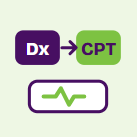
Diagnosis does not support the procedure
What happens
The payer decides the diagnosis doesn’t justify the service. Often the chart supports it, but the code chosen was not specific enough.
Code you’ll see CO-11 diagnosis inconsistent with procedure
Prevent it
- Code to the highest specificity the documentation supports.
- Update code sets every October 1, when the annual ICD-10-CM changes take effect.
- Have a certified coder review any new service line before billing starts.
Reason 5
Missing or incorrect modifiers
What happens
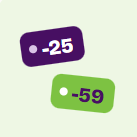
A modifier that explains why a service is distinct or special is missing or wrong. The usual troublemakers are modifier 25 on E/M visits, 59 and the X modifiers for distinct procedures, and GP, CO and GN for therapy.
Code you’ll see CO-4 modifier inconsistent or missing
Prevent it
- Keep a modifier cheat sheet for your top payers.
- Set scrubber edits for your most common modifier gaps.
- Don’t add modifiers “just in case.” Overuse invites audits.

Reason 6
Medical necessity not established
What happens
The payer does not see enough evidence that the service was needed, based on the documentation or its own coverage policy.
Code you’ll see CO-50 not deemed a medical necessity
Prevent it
- Check Medicare Local and National Coverage Determinations for services that frequently deny.
- Make sure provider notes clearly state why the service was needed, not just what was done.
- Use an Advance Beneficiary Notice (ABN) with Medicare patients when coverage is uncertain, so you can bill the patient if Medicare denies.

Reason 7
Bundling and NCCI edits
What happens
A service is considered part of another service billed the same day. Bill it separately without justification, and the payer bundles or denies it.
Code you’ll see CO-97 payment included in another service
Prevent it
- Check claims against National Correct Coding Initiative (NCCI) procedure-to-procedure edits and medically unlikely edits (MUEs).
- Unbundle only when documentation supports a truly separate service, with the correct modifier.

Reason 8
Duplicate claims
What happens
A claim hasn’t been paid yet, so someone sends it again. The payer denies the second one and may flag your account for review.
Code you’ll see CO-18 exact duplicate claim or service
Prevent it
- Check claim status before resubmitting anything.
- Send corrected claims with the proper frequency code instead of a new claim.

Reason 9
Missed timely filing deadlines
What happens
The claim reaches the payer after its filing deadline. It’s denied, usually with no path to appeal. Medicare allows 12 months from the date of service, but many commercial and Medicaid plans allow far less, sometimes only 90 days.
Code you’ll see CO-29 filing time limit expired
Prevent it
- Keep a filing-limit table for every payer you bill.
- Submit claims daily, not in weekly or monthly batches.
- Save clearinghouse acceptance reports as proof of timely filing.

Reason 10
Provider not credentialed or enrolled
What happens
The care was real and the documentation was perfect, but the payer has no record of the provider as in-network, or the provider is not linked to the group billing the claim.
Code you’ll see B7 provider not eligible on the date of service, plus payer-specific enrollment codes
Prevent it
- Never schedule a new provider with a payer until you have a confirmed effective date in writing.
- Link every provider to your group with every payer, not just individually.
- Track CAQH re-attestation, Medicare revalidation and re-credentialing dates so nobody lapses.
What’s changing in 2026
Three shifts this year raise the stakes on getting claims right the first time.
Faster prior authorization decisions
Under CMS’s Interoperability and Prior Authorization Final Rule, Medicare Advantage plans, Medicaid and CHIP programs, and federal Marketplace plans must now return prior authorization decisions within 72 hours for urgent requests and seven days for standard ones, with a specific reason for any denial. Faster answers help, but only when the request is complete the first time.
Prior authorization in traditional Medicare
CMS’s WISeR model added prior authorization for selected services in traditional Medicare, including Texas, starting in 2026. If you bill Medicare in a participating state, confirm which of your services are affected.
More automated claim review
Payers increasingly use automated and AI-driven tools to review claims. Documentation gaps and coding mismatches get caught faster and at greater scale, so claim denials tied to small errors are likely to become more common, not less.
Build a denial prevention system
Working denials one at a time keeps your team busy. Preventing them keeps your practice paid. The practices with the lowest denial rates treat claim denials as data, not paperwork.
Track every denial
Log every denial by reason code and payer. Patterns appear within weeks.
Fix root causes
Fix root causes, not just claims. If eligibility errors keep repeating, the fix belongs at the front desk.
Share trends monthly
Front office staff, coders and providers should all see where denials come from.
Work denials fast
Appeal windows are limited, and aging claims get harder to collect every day.
Quick prevention checklist
- Eligibility verified before every visit
- Prior authorizations tracked by date and visit count
- Claims scrubbed before submission
- Coding reviewed for specificity, modifiers and NCCI edits
- Filing deadlines tracked by payer
At Swift Billing Solutions, we trace medical claim denials back to their source and fix them there, from eligibility and prior authorization to coding, credentialing and appeals. Start with a free practice revenue audit. We’ll review your recent denials, show you exactly where revenue is leaking, and lay out what it would take to fix it.

Swift Billing Solutions Team
Our team shares practical guidance on medical billing, coding, denial management, and revenue cycle operations. We write for physicians and practice managers who want to understand billing challenges, reduce avoidable errors, and keep payments moving.